 Education • March 02, 2026
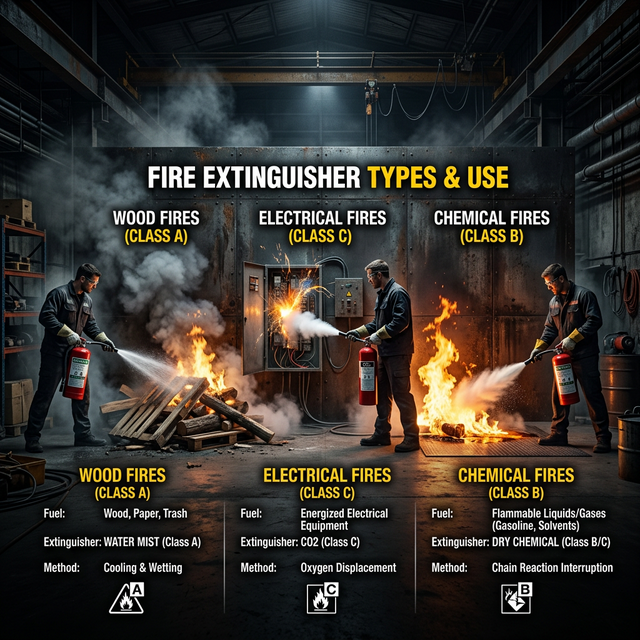
One of the most dangerous misconceptions in fire safety is that any extinguisher can put out any fire. Using the wrong type of extinguisher can not only fail to extinguish the flames but can actually spread the fire or electrocute the user.
ABC Dry Chemical extinguishers are the most common and versatile option. They work by creating a barrier between the oxygen element and the fuel element. While highly effective across Class A, B, and C fires, they leave a sticky residue that can be damaging to sensitive electronics.
Carbon Dioxide extinguishers are explicitly designed for Class B and C fires. CO2 displaces the oxygen surrounding the fire and provides a cooling effect. The major advantage of CO2 is that it leaves absolutely no residue, making it the perfect choice for server rooms, laboratories, and expensive electrical panels.
Choosing the right extinguisher requires evaluating the specific risks of your facility. Contact our team to have an expert survey your premises and recommend the perfect setup.